

-


-


-


-

whatsapp

-


WeChat

Shanghai Songchuan Fengguan Packaging Automation Co.,Ltd


-

Strict quality control
-

Collaborative Innovation
About Us
Shanghai Songchuan Fengguan Packaging Automation Co.,Ltd
Shanghai Songchuan Fengguan Packaging Automation Co.,Ltd has been working in the field of packaging automation for many years. As a high-tech enterprise, the company integrates research and development, production, sales and service. The focus is on the packaging needs of the household paper products (toilet paper, tissues, towels) and hygiene products industry. Guided by the principles of "intelligent, high efficiency, customized", the company provides customers around the world with complete solutions - from individual equipment to fully automated packaging lines.

“Three Hearts” service
Give clients peace of mind, a sense of security and relief from anxiety.
Compliance with quality standards
Customer Reach
Satisfaction level
National High-Tech Enterprise
Certification of qualifications in the field of high technologies
Recognized as a high-tech enterprise and innovative SME in Shanghai, the company has received official certification confirming both the conformity of its products and its technical capabilities.


Customization options for non-standard solutions
Non-standard customization upon request - adapted to personalized production lines
Custom designed production lines can be tailored to specific plant dimensions, product specifications and packaging processes; they provide the flexibility to change packaging formats, quickly adapt to new product variations, and meet the personalized production needs of small and medium-sized businesses.
-
Global service
-
Execution efficiency
-
Professional team, strong power.
-
High quality products, reliable quality.
-
Cutting-edge technologies leading the trend.
Prompt response within 24 hours


Intermediate packaging machine for soft packs TD300ANS
Product Description TD300ANS Intermediate Soft Pack Packaging Machine The TD300ANS facial tissue packaging machine is equipped with a unique circulation magazine for adhesive tape. With a tape magazine for each use, this series of intermediate tissue packaging machines saves more space in the pouch feeding station while ensuring smooth pouch feeding and retrieval. Controlled by motion controller equipped with 8 servo systems. The human-machine interface is highly ergonomic, easy to operate, accurate positioning, more stable operation. New material feeding design and improved jaw design provide more convenient and efficient production. Model TD300ANS Packaging dimensions Maximum length of intermediate packaging: 550 mm Range of width of intermediate packaging: 120-420 mm Range of height of intermediate packaging: 90-105 mm Packaging form Single row: 3, 4, 5, 6 packs; two rows: 6, 8, 10, 12 packs Packaging material M-type ready-made PE/OPP/CPP bag with ventilation holes Packing speed < 30 packs/min Power supply 380 V ± 5%, 50 Hz, three-phase, four-wire; all control circuits - DC 24 V Air supply ≈ 0.6-0.7 MPa (customer provides compressed air supply) Power Installed power per machine: 15 kW Safety Equipment complies with CE standards Remaining material in the bag Waste (length 25-30 mm) is removed into the waste container by an automatic film suction system Large touch screen (HMI) Ease of operation, clear Operating status display, convenient and intuitive debugging. It is possible to store parameters and recipes for several types of products. Photoelectric tracking system Photoelectric sensor automatically detects, servo tracking, automatic and accurate packet feeding, automatic alarm or stop when there is no packet.
More details 
Intermediate packaging machine for soft packs TD300ANK
Main technical parameters 1. Packaging specification: – Maximum length of intermediate packaging: 550 mm – Width of intermediate packaging: 120-420 mm – Height of intermediate packaging: 70-105 mm – Form of intermediate packaging: one row – 3-6 packs, two rows – 6-12 packs 2. Bag material for intermediate packaging: ready-made M type bag with ventilation holes (one layer thickness package 40-60 microns, hole diameter 5-6 mm). Suitable materials: OPP, CPP, PE (the material must have double-sided heat sealing, the hole for the handle must be through, the bag must have good antistatic properties and not stick together). 3. Packing speed: ≤ 50 packs/min (when packing 3 packs). 4. Power supply: power supply 380 V ± 5%, 50 Hz, three-phase, four-wire + grounding. Control voltage – DC 24 V. 5. Required air pressure: approximately 0.6-0.7 MPa (customer provides compressed air supply). 6. Equipment power: installed power 20 kW per machine, power consumption - approximately 16 kW. 7. Equipment safety: safety marking according to CE standards. 8. Waste packaging material: trimmings during sealing - 25-30 mm, are removed by an automatic film suction system into a waste container. Characteristics and Features 1. Control by motion controller, 13 servo systems. High ergonomics, easy operation, accurate positioning, more stable operation.2. New material feed design and improved jaw opening design - faster and more convenient changeover.3. Low power consumption: installed power ≤ 20 kW, normal mode power consumption ≤ 16 kW, which is significantly lower than similar products on the market.4. Compact structure, small footprint, easy to connect to the production line.5. Using well-known domestic and foreign components, high stability and reliability.6. Automatic and accurate feeding of packages, automatic alarm or stop when there is no package.7. The mechanical structure is equipped with overload protection function.8. A unique way to control heating (sealing) to ensure a perfectly even seam.9. Sensors: photo sensors from Omron or SICK - high detection stability.10. Supply of packages from the store: two stores for ready-made packages (working and reserve). The capacity of each store is up to 400 bags. Replacing bags without stopping the machine. Automatic signaling at the end of packages in a working magazine and automatic switching to a backup one.11. All actions of pneumatic cylinders, suction devices and heating circuits can be set to manual or automatic mode on the touch panel.12. Separate receiver for the main source of compressed air. Connection of the main air pipeline is with a Ø12 mm pipe. When the machine comes to a complete stop, all purge devices are automatically switched off. Starting is impossible if there is insufficient air pressure.13. Using the combination of one high-capacity blower and two high-power, high-flow fans ensures accurate bag feeding, high bag opening percentage and good suction shaping effect.14. Places that require adjustment (guides, grips, bag opening suction cups, bag magazines, etc.) are equipped with an electric drive for convenience and quick adjustment.
More details 
Single Channel Large Rotary Tissue Cutting Machine CY300S
Main Parameters of Single Channel Large Rotary Tissue Cutting Machine 1. The electrical control cabinet and the main body of the machine are structurally integrated, ensuring the safety and integrity of electrical circuits. 2. The protective casing is equipped with a built-in metal mesh (without the use of plexiglass), which provides additional safety. 3. High degree of automation: between production cycles, parameters are automatically adjusted, eliminating the need for repeated manual operations. New design, stable operation, no idle cuts, trimmings at the beginning and end of the roll are completely removed. The Soontrue log cutter's control interface has become more efficient and intuitive. Rotary cutter Cutting unit 1. Dimensions of cut products: length = 50-300 mm, width = 80-120 mm, height = 20-120 mm 2. Production speed: 20-300 cuts/min 3. Control system: programmable logic controller (PLC), servo drive, touch panel 4. Feeding method: servo drive, synchronous belt drive with positioning 5. Cutting method: 360° rotation 6. Cutting accuracy: error < 1 mm 7. Knife sharpening system: automatic sharpening, parameter setting via touch panel 8. Outer diameter of cutting knife: Ø610 × 3.8 mm 9. Required compressed air pressure: 0.6 MPa 10. Power supply type: 380 V / 50 Hz 11. Total power: 8.5 kW 12. Maximum equipment dimensions: length = 1509 mm × width = 1590 mm × height = 1570 mm 13. Equipment weight: 1.5 tons 14. Equipment color: computer white 15. Complete servo system, PLC, touch panel, drives 16. Variable frequency drive cutter motor - energy saving 17. Equipment control panel - touch panel (HMI)
More details 
Fully Automatic Face Tissue Folding Machine SCZ-175-1500 or SCZ-200-2000
Main parameters Product price range (in RMB): from 200,000 to 350,000 yuan (depending on the configuration). Product Description: Fully automatic folding machine for making paper facial napkins SCZ-175-1500 / SCZ-200-2000 Folding machines SCZ-175-1500 and SCZ-200-2000 are equipped with an external folding function. After internal folding is completed, each stack of sheets is fed into the folding mechanism, which semi-folds the top sheet. The operation is simple, high efficiency and practical. The folding rollers are processed with high-precision deep boring technology, which ensures the rigidity and strength of each roller, and guarantees the folding accuracy at high speeds. All the lower paper tearing knives are made of imported materials. There are suction holes on the side of the lower knife, which prevents the paper from turning over during high-speed tearing and ensures more accurate stacking of the finished product. Parameter SCZ-175-1500 SCZ-200-2000 Model SCZ-175-1500 SCZ-200-2000 Production speed 100-130 m/min 14 packs/min (speed depends on folding width) 100-130 m/min 12 packs/min (speed depends on folding width) Standard width Max. 1430 mm Max. 1910 mm Number of layers per roll 2-4 layers 2-4 layers Paper grammage 2 layers: 13.5-18 g/m² per layer 3-4 layers: 11-15 g/m² per layer 2 layers: 13.5-18 g/m² per layer 3-4 layers: 11-15 g/m² per layer Unfolded size (mm) 175 mm (+1, -2) (if different, please indicate) 200 mm (+1, -2) (if different, please indicate) Size after folding (mm) 87.5 mm (+1, -1) (if different, please indicate) 100 mm (+2, -0) (if different, please indicate) Folding section motor power (kW) 5.5 kW 5.5 kW Power vacuum pump (kW) 30 kW 37 kW Power supply type 380 V, 50 Hz (if different, please specify) 380 V, 50 Hz (if different, please specify) Control voltage (V) 24 V 24 V Compressed air (MPa) ≥ 0.6 MPa ≥ 0.6 MPa Unwinder nfor jumbo rolls Produces facial tissues from jumbo rolls with a width of 1500 mm or 2000 mm Pattern embossing unit (optional) Combines the functions of pattern embossing, folding, counting and cutting, providing a high degree of automation and excellent quality. Tissue Folding Machine The Tissue Folding Machine automatically cross-folds a preset number of napkins without stopping the machine.
More details 
Bottom Pull Folding Machine SCQ-175-1500
Main parameters Design speed: 130 m/min Stable operating speed: – Bottom pull mode: 100-110 m/min or 3-5 packs/min – Soft pack mode: 100-110 m/min or 10-13 packs/min Standard width: 1400-1450 mm Finished product size: 175 mm (other sizes - under order) Raw materials used: two-layer, weight of each layer 13.5-18 g/m²; three- and four-layer, weight of each layer 11-15 g/m² No. Parameter Technical characteristics 1 Max. original paper width (mm) 1450 2 Design speed (m/min) 130 3 Stable working speed Bottom output: 100-110 m/min or 3-5 reams/min Soft ream: 100-110 m/min or 10-13 reams/min 4 Paper tearing method Fixed tearing by spiral knife 5 Machine design Panel type 6 Finished product size 175 ± 2 mm 7 Folding configuration 87.5 (+1, +4) mm 8 Lower knife lubrication Manual 9 Folding type Vacuum, V-shaped cross folding 10 Paper feeding method Manual threading 11 S-shaped paper path S-shaped pull shaft, servo drive, tension adjustment via touch panel 12 Paper break detector Automatic shutdown when a break is detected 13 Paper jam detector Automatic shutdown when paper jams on the knife 14 Paper joint processing 1. Paper break detection 2. Opening of spiral knives to skip the joint 3. Closing of spiral knives 15 Vacuum system power 30 kW (vacuum pump) 16 Drive power 3.8 kW 17 Drive system Individual electric motor Other 18 Protection The main drive components are protected by protective covers 19 Vacuum pipe Vacuum pipe and installation are provided by the buyer 20 Weight ≈ 3200 kg
More details 
The product comes with a 12 month warranty and lifetime service.

During the warranty period, if any quality defects occur, we provide free repair and replacement.

We provide installation, commissioning and training services.

After the warranty period expires, we continue to provide long-term preferential maintenance services for products sold, including technical support, product upgrades, rapid response to faults, and technical consultation for relevant personnel.
Precise execution, consistent quality.
Win the market with your reputation, retain your customers with your service.
This custom multi-strand handkerchief packaging line is highly accurate, produces flat and sealed seams, and exhibits exceptional stability when running continuously at full capacity.

Alexander
A robotic arm ensures precise positioning of products when placing them in boxes; When integrated with a vision system, defective products are automatically rejected, enabling intelligent operation of the entire secondary packaging line.

Dmitry
This equipment is equipped with an optional remote fault diagnosis function, which eliminates the need to wait for a personal visit from a technician every time: minor problems can be resolved online, so even remote production sites do not have to worry about delays in after-sales service.

Ekaterina
Reliable quality from a large manufacturer - a high-tech enterprise; carefully designed equipment and efficient installation and commissioning.

Valentina
Latest blog and articles
We warmly welcome friends to cooperate with us.
News
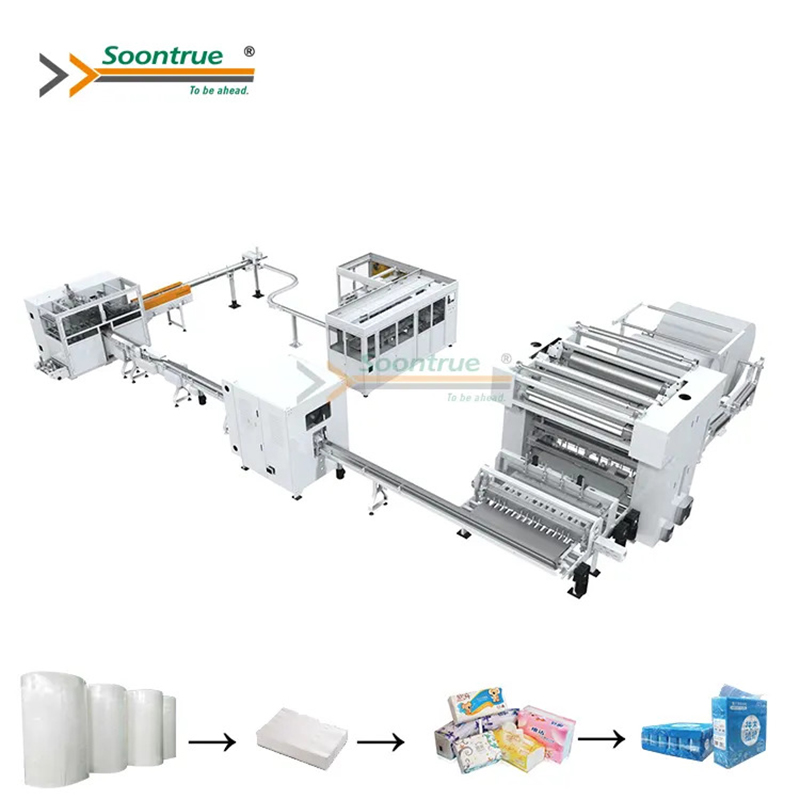
Intelligent era: Automatic packaging machines for tissue paper products promote the upgrading of the industry's production model
Introduction: The Tissue Paper Industry Enters the Era of Packaging Automation With the continuous development of the global tissue paper market, consumers are placing ever higher demands on the quality of paper products, packaging forms and delivery speed. At the same time, paper products manufacturers face challenges such as rising labor costs, increased market competition and the need to improve production efficiency. In the past, many enterprises still relied heavily on manual labor for the tissue packaging process. From sorting the products, packing them into packaging, and sealing them, a large number of workers were required. This production model not only had limited efficiency, but also depended on the qualifications of personnel, resulting in inconsistent packaging quality. With the rise of smart manufacturing, automatic packaging machines for tissue paper products are becoming an important choice for more and more enterprises looking to modernize their production processes. Through the use of automated technologies, enterprises can realize intelligent packaging processes, increase productivity, reduce operating costs and strengthen competitiveness in the market. Shanghai Songchuan Fengguan Packaging Automation Co., Ltd. specializes in the packaging needs of the tissue and hygiene products industry. The company is a high-tech enterprise integrating development, production, sales and technical service. The company is committed to providing customers with efficient, stable and intelligent automated packaging solutions, helping the industry realize production modernization. The Main Problems of the Traditional Tissue Paper Packaging Model In the traditional manufacturing model, the packaging of tissue paper products is mainly done by hand. Although hand packaging has some flexibility, its limitations become increasingly apparent as production scales increase. Continuously Rising Labor Costs As labor costs increase, the number of workers required for the packaging process continues to increase, increasing production pressures on businesses. Especially for high-volume tissue paper manufacturers, labor costs have become an important factor affecting product competitiveness. Automatic packaging equipment reduces reliance on manual operations, performing repetitive processes in a mechanized and intelligent manner, allowing businesses to optimize staff allocation and improve overall productivity. Packaging performance does not meet mass production requirements Tissue paper products are typically characterized by high order volumes and short delivery times. Traditional manual packaging is limited by the number of workers and the speed of operations, making it difficult to maintain a stable and efficient production rhythm in the long term. The automatic packaging machine is capable of continuous operation and high-speed packaging according to the production needs of the enterprise, greatly increasing the output per unit time and meeting the requirements of large-scale production. Insufficient consistency in the quality of product packaging During the manual packaging process, due to differences in the experience and skills of operators, the following problems may arise: varying degrees of packaging density; uneven placement of products; differences in sealing quality; instability of the appearance of the packaging. For branded tissue paper products, packaging not only affects consumers' first impression, but is also directly related to the enterprise's brand image. Automatic packaging equipment, through precise control of packaging parameters, ensures a uniform standard for each packaging unit and increases the consistency of product quality. Difficulties in recruiting staff affect the continuity of production In recent years, manufacturing enterprises have been faced with a general problem of labor shortage. Packaging processes in the tissue paper industry are characterized by highly repetitive operations and heavy dependence on personnel. If there are not enough workers, production plans may be disrupted. Automatic packaging equipment reduces production's dependence on manual labor, improves the stability of production lines, and helps enterprises achieve long-term continuous production. Automatic packaging machines help modernize the tissue production process Modern automatic packaging machines for tissue products are no longer simple packaging equipment, but are complex automated systems that integrate mechanics, electrical control and intelligent production control. Thanks to automated technologies, businesses can optimize the entire process, from product inlet to finished packaging. Automatic Feeding, Enhancing Production Continuity The automatic feeding system ensures the stable transport of paper products to the packaging area according to the production rhythm, reducing manual handling and sorting, and increasing the ability of the production line to operate continuously. Precise feed control reduces the likelihood of product build-up and problems during transport, improving overall production efficiency. Automatic folding, ensuring precise packaging For various types of tissue paper, such as: paper napkins; soft packs of paper towels; boxed tissues; toilet paper; Automated equipment can make precise adjustments to suit product specifications, ensuring a stable and efficient packaging process. Auto-folding technology not only improves production speed, but also ensures neat product placement, improving the final appearance of the packaging. Automatic bagging, improving packaging efficiency The automatic bagging system performs the processes of product feeding into packaging material, positioning and leveling, greatly reducing personnel involvement. Compared with traditional manual packaging, automatic equipment ensures a stable production rhythm, improves packaging efficiency and reduces the influence of human factors. Automatic sealing, improving product quality The quality of sealing directly affects the safety of products during transportation and sale. The automatic sealing system allows you to accurately control: sealing temperature; sealing pressure; sealing time. This ensures the strength and aesthetics of the packaging, increasing the market appeal of the product. Automatic control, improving production reliability Intelligent packaging equipment can be integrated with control systems to monitor the production process in real time. For example: product quantity control; monitoring the condition of the packaging; alarm about deviations. Thanks to automatic monitoring, enterprises can promptly identify production problems, reduce the number of substandard products and improve the level of quality management. Automatic palletizing, logistics automation In high-speed production environments, automatic palletizing systems can further reduce manual operations and increase the efficiency of warehouse and logistics operations. From production and packaging to palletizing, the entire process can be integrated into a single automated system, making the production line more intelligent. III. Future Development Trends of Automatic Tissue Paper Packaging Equipment With the further development of intelligent manufacturing, automatic tissue paper packaging equipment will develop in the directions of increasing speed, intelligence and flexibility. High Speed: Meeting the Demands of High-Batch Production With ever-increasing market demand, enterprises need packaging machines with higher productivity and operating stability. In the future, packaging equipment will achieve faster and more stable production through optimized mechanical design and improved control precision. High-speed production means not only increasing output, but also maintaining consistent quality while working at high speed. Intelligent: enhancing production management Intelligentization is a key development direction for the packaging machinery of the future. Thanks to intelligent control systems, the equipment will be able to implement: automatic parameter settings; production data recording; automatic fault diagnosis; remote technical support. Enterprise managers will be able to more clearly obtain information about the state of production and improve management efficiency. Flexibility: adapting to diverse market demands As consumer demand changes, the product range of tissue paper products is becoming increasingly diversified. Enterprises need to produce products in a variety of packaging sizes and shapes, so equipment must have greater production flexibility. Future automatic packaging equipment will pay more attention to: fast changeover; compatibility with various formats; individual customization for the customer. This will allow businesses to respond more quickly to market changes. Energy efficiency: reducing long-term operating costs Against the backdrop of constantly rising energy costs, energy conservation and environmental friendliness are becoming important areas for the development of manufacturing enterprises. Future packaging equipment will help reduce costs by: optimizing drive systems; reducing energy consumption; improving work efficiency. This will help businesses implement a greener and more efficient production model. The importance of choosing a professional automatic packaging equipment supplier Automatic tissue paper packaging machine is a long-term investment equipment. When choosing a supplier, enterprises need to take into account not only the cost of equipment, but also comprehensively evaluate technical capabilities, product stability and level of service. A professional equipment manufacturer must have: in-house development capabilities; rich experience in the industry; perfect production system; Possibility of quick maintenance. Shanghai Songchuan Fengguan Packaging Automation Co., Ltd. specializes in the development of packaging equipment for the tissue and hygiene products industry. Through continuous technological innovation, the company provides customers with automated packaging solutions that meet various production requirements. Conclusion: Automatic packaging is an important direction for the future development of tissue paper enterprises. In the face of rising labor costs, increasing market competition and increasing consumer demands, tissue paper enterprises must continuously improve production efficiency and automation levels. Automatic packaging machines not only help reduce dependence on manual labor and improve packaging efficiency, but also help shift manufacturing models towards intelligent and highly efficient development. In the future, with the development of high speed, intelligentization, flexibility and energy saving technologies, automatic tissue paper packaging equipment will become an important support for enterprises to enhance competitiveness and achieve sustainable development. Shanghai Songchuan Fengguan Packaging Automation Co., Ltd. will continue to provide tissue paper mills around the world with professional, efficient and reliable automated packaging solutions, helping the industry move towards a new era of intelligent manufacturing.
More details 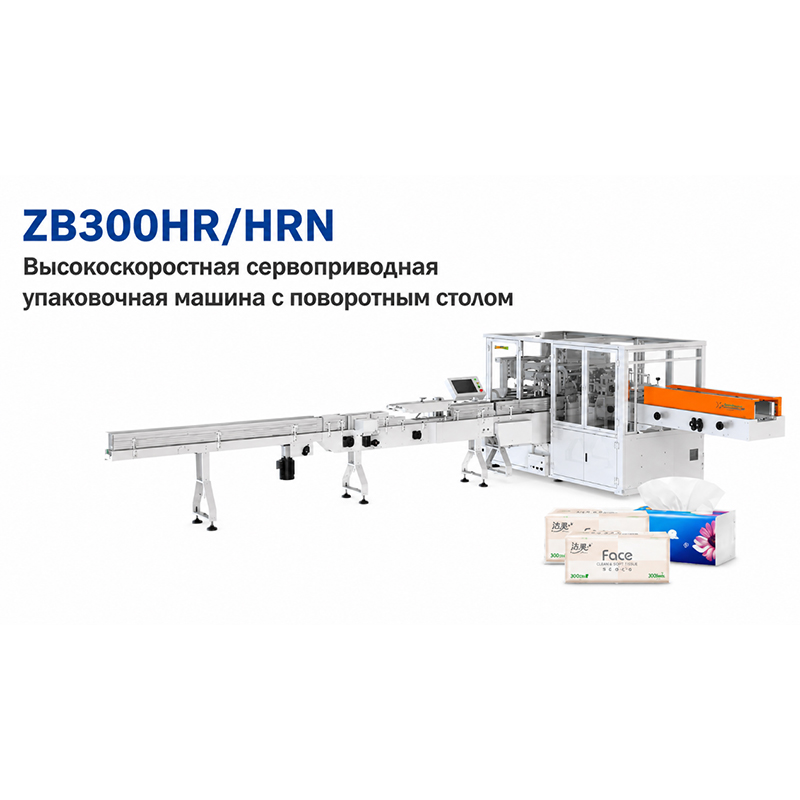
News
High Speed Fully Automatic Soft Tissue Packaging Machine: A Key Driver to Increase Productivity in Paper Industry Enterprises
With increasing competition in the tissue industry and ever-tightening profit margins, the packaging process, which is the “last mile” of downstream processing of paper products, directly impacts the efficiency of the entire production line. Manufactured by Shanghai Songchuan Fengguan Packaging Automation Co., Ltd., the ZB300HR fully automatic high-speed soft tissue packaging machine, with its advanced full servo control system and high-precision mechanical design, provides a complete solution to overcome the limitations of the packaging process and greatly improve the productivity of paper industry enterprises. Total Servo System: Redefining Packaging Efficiency Standards Traditional tissue packaging equipment is mostly driven by a single main motor, with all operating mechanisms interconnected through mechanical cam mechanisms. This design not only limits performance, but also complicates setup and maintenance. To solve these problems, Songchuan Fengguan proposed a technological solution in related technical patents: “rejecting the traditional mechanical cam structure and controlling each actuator through independent servo drive units.” The ZB300HR model is equipped with 11 sets of absolute servo systems and 3 sets of frequency converters, which ensures independent control of each operating unit and precise synchronization of all processes. Practical industry data shows that once key components are switched to independent servo control, the consistency and speed of operations are significantly improved, and overall packaging efficiency increases by approximately 43% compared to traditional drive systems. For example, the ZB300HR uses a four-position rotary packaging design combined with a full servo control system, delivering design speeds of up to 200 packs per minute. This means that one machine can pack nearly 300,000 packages daily, providing reliable support for large-scale production in the paper industry. Intelligent management: reducing losses, increasing quality output and reducing labor costs The packaging process is traditionally one of the most labor-intensive stages in the subsequent processing of paper products. Previously, some mills producing more than 200 tons of paper products per day relied entirely on manual cutting and packaging, with more than 700 employees in the post-processing area. The intelligent design of the ZB300HR addresses these problems on multiple fronts: Effective Material Consumption Control Thanks to the photoelectric intelligent monitoring and tracking system, the equipment automatically detects and eliminates problems such as connected packages, empty packages and double-feeding of products, significantly reducing packaging material consumption. The electric film tension control ruler provides real-time feedback, ensuring accurate and stable film feeding and effectively preventing packaging instability caused by film roll fluctuations. Significantly improve production changeover efficiency Intelligent human-machine interface supports recipe storage at the touch of a button. When changing products, the operator can quickly recall saved parameters, significantly reducing setup time and reducing material wastage between different products. An industry first, the use of an electronic control knob instead of a traditional mechanical handwheel makes the setup process more convenient, improves positioning accuracy and reduces dependence on operator skill. Ensuring consistent product quality All key components of the equipment can be adjusted independently, eliminating the disadvantages of traditional cam transmission, which is difficult to accurately control the interaction time and position of the mechanisms. This significantly improves product quality indicators such as the correct shape of the packaging and the aesthetics of sealing. The air-cooling function at the outlet additionally ensures high quality and attractive appearance of the packaging seam. Whole Production Line Interoperability: Unleashing the Potential of the Front Line The real value of a fully automatic high speed tissue paper packaging machine is its ability to seamlessly integrate with front line equipment, including paper cutting machines and folding machines, to form a fully automated production line. The use of an anti-shift feeding system ensures stable material feeding. The integrated central feed and output installation simplifies the setup of the entire line. Shanghai Songchuan Fengguan Packaging Automation Co., Ltd. provides equipment and complete solutions for the entire production chain, from individual packaging to group packaging, bulk packaging, case packing and palletizing, helping customers maximize production line efficiency. When the packaging process is no longer the bottleneck of the entire production line, the productivity of high-speed front paper folding processes truly translates into finished products ready for delivery. It is this effect of the interaction of the entire line that is the key factor in achieving significant productivity growth in paper mills. Today, as the tissue industry strives for "maximum efficiency" and "minimum cost", the ZB300HR Fully Automatic High Speed Tissue Packaging Machine is not just a packaging machine, but a strategic investment to enable paper industry enterprises to overcome production constraints and create a competitive advantage through lower cost.
More details 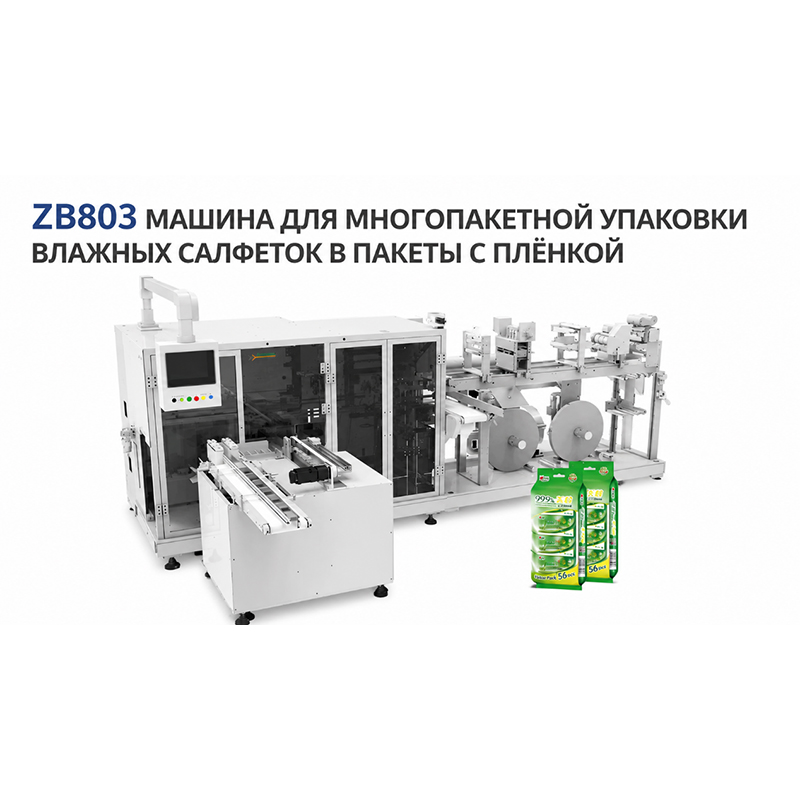
News
What is the difference between packaging equipment for tissues, toilet paper and wet wipes? How to choose?
Introduction: Different types of paper products require appropriate packaging equipment With rising living standards and changing consumer habits, the market for tissue paper and related products is constantly segmented. From suction-fed paper wipes for everyday use in the home, to toilet paper for hotels and commercial environments, to the booming wet wipes product in recent years, different types of products have significant differences in sizes, packaging methods, manufacturing processes and market requirements. For paper product manufacturing enterprises, packaging equipment is not just a “universal equipment”, it must be selected according to product characteristics, production scale and market positioning. If the selection of equipment does not meet production requirements, it will not only affect operating efficiency, but may also lead to increased operating costs and a decrease in the competitiveness of the enterprise. Paper Tissue Packaging Equipment: Focus on High Speed, Precision and Attractive Packaging Product Features of Tissue Paper Tissue paper is one of the most widely used types of tissue paper, and mainly includes: pull-fed boxed tissue; • soft packaging of napkins (soft pack); • portable paper napkins. Products of this type are usually characterized by high frequency of consumption, large production runs and varied packaging forms. Especially for pull-fed napkins, the paper needs to be neatly stacked, each napkin can be easily removed, and the packaging appearance must meet the requirements of the retail market and brand presentation. Features of Paper Tissue Packaging Equipment Automated tissue packaging equipment is mainly designed to meet the needs of high-speed continuous production and includes the following processes: automatic cutting of paper products; • continuous transportation of products; • automatic formation of packages; • automatic supply of packaging material; • automatic packaging in a bag or box; • automatic sealing; • output of finished products. The equipment must be able to automate the entire packaging process and also have high operating stability to meet the continuous production requirements of large paper product manufacturers. For high-quality paper napkin products, packaging equipment must also take into account packaging appearance, protective functions and requirements for different product sizes, meeting the diversified needs of the market. Toilet Tissue Packaging Equipment: Focus on Packaging Productivity and Efficiency Features of Toilet Paper Products Compared with tissue paper, toilet paper has significant differences in product shape and packaging methods. Main products include: toilet paper roll; • long rolls of toilet paper; • kitchen paper; • large family packs of toilet paper. Toilet paper is typically characterized by high production volume, many products per package, and high transportation requirements. For example, family packs of toilet paper often use multi-roll bulk packaging or shipping carton packaging, so the packaging equipment must have high continuous packaging capability. Features of Toilet Paper Packaging Equipment Toilet paper packaging equipment usually pays special attention to the following aspects: High-speed packaging Based on product characteristics and market requirements, the equipment must achieve long-term stable operation at high speed, guaranteeing productivity, reducing defect rates and reducing production costs. Ability to adapt to different formats Different markets' requirements for toilet paper packaging are different: 4 rolls / 6 rolls / 10 rolls / 12 rolls / 24 rolls and other options. Therefore, the equipment must have high production flexibility. Packaging stability Toilet paper is light in weight but large in volume. During the packaging process, it is necessary to maintain the correct arrangement of products, uniformity of the finished packaging, ease of transportation, protection from deformation and contamination, and reduction of product losses. Packaging equipment for wet wipes: increased requirements for tightness and sanitary standards Features of wet wipes products Wet wipes belong to the category of sanitary and hygienic products. They contain a certain amount of moisture, so the requirements for outer packaging are much higher. The packaging must have reliable tightness, exclude leakage of air, liquid and damage to the packaging, which is one of the important criteria for quality control of the finished product. Main types of wet wipes: baby wipes; • disinfectant wet wipes; • cleansing wet wipes; • makeup remover wipes. Features of packaging equipment for wet wipes High tightness of packaging Basic requirements: prevention of moisture evaporation; • preservation of product moisture; • prevention of external pollution. Therefore, the requirements for sealing accuracy and quality of equipment sealing are much higher. Accurate dosing and placement During the production of wet wipes, it is necessary to ensure: the exact amount of product in each package; • neat arrangement of products; • uniform appearance. Automated packaging equipment reduces manual errors and increases product standardization. Sanitary safety design Wet wipes are products that come into direct contact with the skin and contain liquid, so the requirements for the production environment are significantly higher than for conventional paper wipes. The main goal is to effectively control microbial contamination at all stages of production and ensure sanitary safety of products. The equipment itself must meet strict sanitary requirements, using easy-to-clean materials such as stainless steel for fluid and product contact parts, and a fully closed fluid circulation system to prevent contamination. The Main Differences Between Tissue, Toilet Paper and Wet Wipes Packaging Equipment In terms of product characteristics, the main differences between the three types of packaging equipment are presented as follows: Comparison Parameters Paper Tissue Equipment Toilet Paper Equipment Wet Wipes Equipment Product Features Small size, high consumption frequency Large volume, large batches Liquid content, high sanitary requirements Basic requirements Precision, appearance, high speed High productivity, stable performance Sealing, safety Focus Packaging fold and uniformity Packaging speed and load-bearing capacity Protection against leakage, evaporation and contamination Automation requirements High High High Main markets Home, hotels, retail Home, supermarkets, wholesale Baby products, medical, household chemicals How can businesses choose the right packaging equipment? When choosing equipment, first of all, it is necessary to determine: the type of product being manufactured; • layout of the production premises; • target annual production volume; • target market. Based on the actual needs and positioning of the enterprise, it is necessary to select the appropriate packaging technology for each type of product and determine the model and parameters of packaging equipment. Intelligent packaging equipment becomes the future direction of development With the continuous development of the tissue paper industry, packaging equipment is developing in the direction of intelligentization. In the future, packaging equipment will pay more attention to the following areas: High speed Meeting the needs of mass production and increasing the output per unit time. Intellectualization Thanks to PLC control, human-machine interface and data management systems it is possible: intelligent monitoring of the production process; • control of production parameters; • analysis of production data. Manufacturing Flexibility Adapt to rapid changes in products of different sizes and increase the ability of enterprises to quickly respond to market changes. Energy saving Reducing equipment operating costs and increasing the long-term economic efficiency of the enterprise. Conclusion: Proper selection of packaging equipment is the key to improving the competitiveness of paper products enterprises Although paper napkins, toilet paper and wet wipes belong to the same tissue product industry, due to differences in product characteristics, the requirements for packaging equipment are significantly different. When purchasing automated packaging equipment, businesses need to comprehensively consider product type, market positioning, production scale and future development plans. Choosing the right automated packaging solution not only improves production efficiency and reduces reliance on manual labor, but also improves product quality, realizing a more stable and efficient production model. Shanghai Songchuan Fengguan Packaging Automation Co., Ltd. continues to focus on the development of the tissue paper and personal care products industry, providing domestic and foreign customers with efficient, reliable and intelligent automated packaging solutions, helping enterprises reach a new stage in the development of intelligent manufacturing.
More details